
Metal

ONE SONGFEI

Metal CNC
Machining Materials

STEEL
01.STEEL

Songfei offers a wide range of custom carbon steel CNC machining services.

SSteel is an alloy based on an iron matrix, typically containing approximately 1% carbon. To enhance its properties, small amounts of other alloying elements—such as molybdenum and chromium—are often added. Due to its ease of cutting and welding, steel strikes an excellent balance between cost-effectiveness and functionality. However, as it is prone to oxidation over time, steel requires surface treatment to provide protection.

Ordinary Carbon Steel
  • Q235B

    Carbon content ranges from 0.12% to 0.22%; it features relatively lenient limits on sulfur and phosphorus and cannot undergo quenching and tempering.

  • Q355

    Carbon content is approximately 0.2%; it offers higher strength.

  • Applications :

    Machine frames, support brackets, enclosures, custom bases, and general connecting components.

  • Applications :

    Equipment main beams, load-bearing brackets, and thick-plate welded assemblies.

  • International Equivalents

    S235JR , A36 , SS400.

High-Quality Carbon Structural Steel
  • 10#/20#

    Low Carbon, C ≈ 0.10%/0.20%

    Low carbon content facilitates carburization; offers good toughness.

    Applications :

    Equipment main beams, load-bearing brackets, and thick-plate welded assemblies.

  • 135#/45#

    Medium Carbon, C ≈ 0.35%/0.45%

    Capable of undergoing quenching and tempering; offers excellent overall mechanical properties.

    Applications :

    Various transmission shafts, flanged bushings, crankshafts, and precision-machined components (this is the primary material utilized by our facility).

  • 55#/60#

    High Carbon, C ≈ 0.55%/0.60%

    Features high hardness and wear resistance.

    Applications :

    Wear-resistant sliders, spring components, and wear-resistant liner rings.

  • International Equivalents

    1010/1020/1035/1045 (SAE), S10C/S20C/S45C (Japanese Standard).

STAINLESS STEEL
02.STAINLESS STEEL

Songfei Offers a Wide Range of Custom Stainless Steel CNC Machining Services

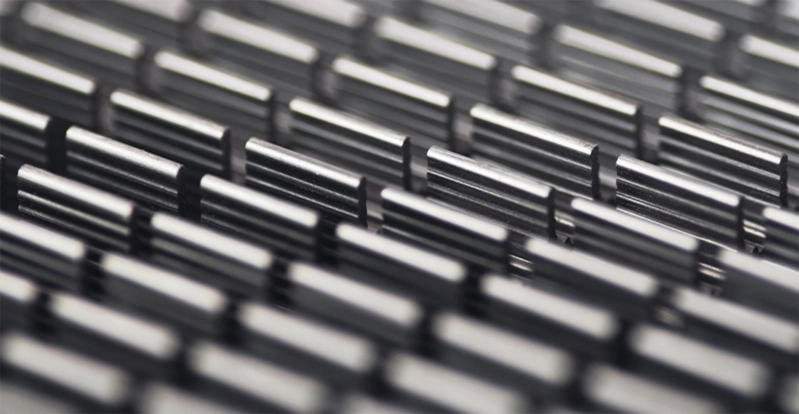
Stainless steel is a ubiquitous metal material that is critical to numerous industries, ranging from healthcare to power generation. Its value lies in its exceptional strength, heat resistance, and outstanding corrosion resistance.
  • 304

    06Cr19Ni10, SUS304

    Chromium ≈ 19%, Nickel ≈ 8%. A general-purpose, rust-resistant grade that is easily machinable (suitable for turning)

    Applications :

    Stainless steel flange bushings, standard mechanical bushings, and general corrosion-resistant fittings.

  • 316L

    022Cr17Ni12Mo2, SUS316L

    Chromium 17%, Nickel 12%, Molybdenum 2%. A low-carbon grade offering superior resistance to acid and alkali corrosion.

    Applications :

    Bushings for chemical processing and marine (seawater) environments, and precision corrosion-resistant components.

  • 420

    2Cr13, SUS420J2

    Chromium ≈ 13%, Nickel-free. This grade can be heat-treated (quenched) for increased hardness and wear resistance.

    Applications :

    Wear-resistant bushings, small valve cores, and wear-resistant liner rings.

  • 430

    1Cr17, SUS430

    Chromium ≈ 17%. A ferritic stainless steel grade that is nickel-free and offers excellent cost-effectiveness.

    Applications :

    Light-load, rust-resistant gaskets and general-purpose non-standard bushings.

TITANIUM ALLOYS
03.TITANIUM ALLOYS

Songfei Offers Custom CNC Machining Services for Titanium Alloys

Titanium (symbol Ti in the periodic table) is a lightweight metal possessing a wide range of practical properties—spanning everything from corrosion resistance to the ability to maintain its structural integrity even under extreme temperatures.


As an advanced material, titanium features exceptional corrosion resistance, biocompatibility, and an outstanding strength-to-weight ratio. Thanks to this unique combination of properties, titanium stands as an ideal choice for addressing the numerous engineering challenges faced by industries such as medical, energy, chemical processing, and aerospace.

Industrially Pure Titanium

TA1/TA2/TA4; US Standards: Gr1/Gr2/Gr4; contains no alloying elements

  • TA1 (Gr1) Composition: Ti ≥ 99.5%, Fe ≤ 0.2%, O ≤ 0.18%.
    Characteristics :

    Possesses the highest plasticity and strongest corrosion resistance among pure titanium grades, though its strength is relatively low.

    Applications :

    Chemical anti-corrosion pipelines, electroplating anodes, medical thin sheets, cryogenic equipment, and custom corrosion-resistant bushings.

  • TA2 (Gr2; the most widely used pure titanium grade on the market)
    Composition :

    Ti ≥ 99.2%, Fe ≤ 0.3%, O ≤ 0.25%.

    Applications :

    Seawater processing equipment, heat exchangers, flanges, dental implant abutments, instrumentation components, and pump casings.

  • TA4 (Gr4)
    Composition :

    Features higher upper limits for impurities; consequently, it possesses the highest strength among all pure titanium grades.

    Applications :

    High-pressure corrosion-resistant valve bodies, marine seawater piping systems, and high-strength structural components made of pure titanium.

α+β Type Titanium Alloys

TC Series; accounts for the largest volume of usage across the entire industry; capable of heat treatment/tempering; a highly versatile material
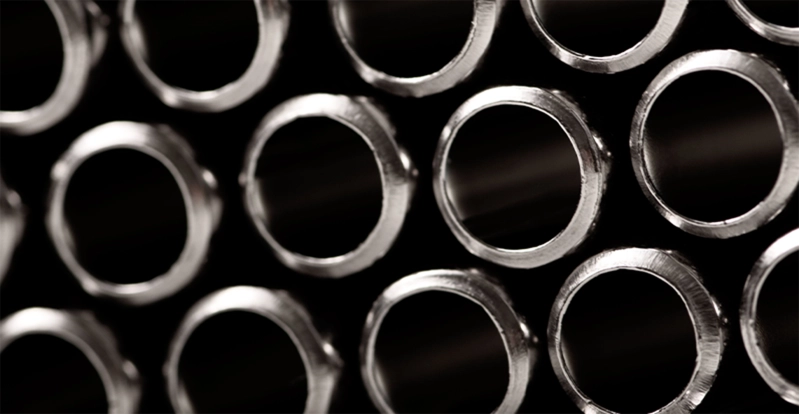
  • TC4 (Ti-6Al-4V; Gr5; the world's premier titanium alloy grade, accounting for 70% of global titanium consumption)
    • Composition :

      Al 5.5–6.75%, V 3.5–4.5%, with the remainder being Ti; Fe ≤ 0.3%, O ≤ 0.2%. Service Temperature: ≤ 400°C.

    • Annealed Strength:

      Approximately 900 MPa.

    • Applications :

      Aviation turbine blades and impellers, military structural components, medical bone screws/artificial joints, precision-machined bushings (typically via 5-axis machining), hydraulic valve bodies, drone structural components, and lightweight racing vehicle accessories.

ALUMINUM ALLOYS
04.Aluminum Alloys

Songfei Offers Custom CNC Machining Services for Titanium Alloys

Aluminum is a lightweight metal possessing an exceptional strength-to-weight ratio, making it ideally suited for applications that demand metal-grade strength while simultaneously requiring weight considerations. Aluminum is available in a wide variety of alloy grades, each identified by the first digit of its classification number; this digit signifies the alloy's primary constituent element.


Aluminum ranks among the most widely utilized materials in the aerospace, medical, and automotive industries. This widespread adoption is attributed to its outstanding strength-to-weight ratio, formability, and broad versatility.

Industrially Pure Titanium

TA1/TA2/TA4; US Standards: Gr1/Gr2/Gr4; contains no alloying elements

  • 1-Series Pure Aluminum (Al ≥ 99%; e.g., 1050, 1060, 1070)
    Composition :

    Al > 99.5%; contains almost no alloying elements.

    Characteristics :

    Soft, highly ductile, corrosion-resistant (rust-proof), low strength.

    Applications :

    Anti-corrosion gaskets, thin-sheet enclosures, non-load-bearing decorative components.

  • 2-Series Aluminum-Copper Alloys (Duralumin; e.g., 2024, 2A12, 2017)
    Main Alloying Elements :

    Cu 3.8%–4.9%; also contains Mg and Mn; heat-treatable for strengthening.

    Characteristics :

    High strength, wear-resistant, poor corrosion resistance.

    Applications :

    Aircraft structural components, precision pins and shafts, high-strength machined parts.

  • 3-Series Aluminum-Manganese Alloys (Rust-proof Aluminum; e.g., 3003, 3A21)
    Main Alloying Elements :

    Mn 1.0%–1.5%.

    Characteristics :

    Excellent corrosion resistance, non-hardenable via quenching, easily bent/formed.

    Applications :

    Hydraulic oil tank housings, custom anti-corrosion bushings, sheet metal enclosures.

  • 4-Series Aluminum-Silicon Alloys (Casting Aluminum; e.g., 4032, ZL104)
    Main Alloying Elements :

    Si 7%–12%.

    Characteristics :

    Excellent casting fluidity, wear-resistant.

    Applications :

    Die-cast housings, pistons, die-cast bushings.

  • 5-Series Aluminum-Magnesium Alloys (Rust-proof Aluminum; e.g., 5052, 5083, 5754)
    • Main Alloying Elements :

      Mg 2%–4.5%.

    • Characteristics :

      Superior corrosion resistance, good toughness, non-heat-treatable.

    • Applications :

      Components for marine/seawater environments, ship flanges, corrosion-resistant aluminum sleeves.

  • 6-Series Aluminum-Magnesium-Silicon Alloys (Machining Workhorses; e.g., 6061, 6063, 6082)
    • Main Alloying Elements :

      Mg + Si; can be strengthened via solution heat treatment and aging.

    • 6061 :

      Balanced overall properties; the most versatile grade.

    • Applications :

      Aluminum flanges, aluminum bushings, shaft mounts/bases, precision machined parts.

    • 6063 :

      Relatively soft, easily extruded; primarily used for profiles.

    • Applications :

      Structural brackets/frames, lightweight enclosures.

    • 6082 :

      Higher Mg and Si content; offers higher strength than [other grades in this series]. 6061

    • Applications :

      Heavy-duty aluminum bushings, aluminum components for construction machinery.

  • 7-Series Ultra-High-Strength Aluminum (Aerospace Aluminum 7075, 7A04)
    • Main Alloying Elements :

      Zn 5%–7% + Cu + Mg.

    • Characteristics :

      Strength comparable to steel; heat-treatable.

    • Applications :

      High-strength, lightweight bushings; military equipment; precision aerospace components.

COPPER BRASS BRONZE
05.COPPER BRASS BRONZE

Songfei offers custom CNC machining services for Copper, Brass, and Bronze.

SRed copper is an excellent electrical and thermal conductor; its conductivity and thermal properties are second only to silver. Commercially available copper typically possesses a purity level exceeding 99%; the remaining 1% usually consists of impurities such as oxygen, lead, or silver.


Brass is a collective term referring to various copper-zinc alloys. These alloys exhibit diverse characteristics depending on their specific zinc content and whether other alloying elements—such as lead, aluminum, or iron—have been incorporated. Thanks to its copper composition, brass possesses good thermal and electrical conductivity; furthermore, it demonstrates excellent wear resistance.


Bronze is an alloy composed of copper mixed with tin (up to approximately 35%) and lead (up to 8%). It is precisely due to the inclusion of lead—a soft metal—that bronze acquires its exceptional machinability. Bronze is highly suitable for use in components such as bearings.


Bronze, brass, and other copper alloys all possess a range of important electrical, mechanical, and corrosion-resistant properties. Specifically, bronze boasts outstanding machinability, with a machinability rating reaching as high as 100%. Additionally, it exhibits low-friction characteristics, making it an ideal material for manufacturing components that are subjected to continuous frictional contact.

  • Red Copper (Pure Copper, Cu ≥ 99.9%)
    • T2 (C1100) :

      Cu ≥ 99.90%, containing only trace impurities; features excellent electrical and thermal conductivity, as well as good plasticity.

    • Applications :

      Electrical terminals, gaskets, small sealing bushings, and thermal management components.

    • TU1/TU2 Oxygen-Free Copper: Extremely low oxygen content, high electrical
  • Brass (Cu + Zn Binary Alloy)
    • H62 (C28000) :

      62% Cu, 38% Zn; easy to machine and offers high cost-effectiveness; used for standard nuts, bushings, and general small hardware.

    • H59 (C27000) :

      E59% Cu, 41% Zn; features high strength and wear resistance; used for machined non-standard bushings and pins.

    • HPb59-1 Leaded Brass :

      Bronze (Tin Bronze, Aluminum Bronze, Graphite Bronze—the primary materials for bushings)

  • Tin Bronze
    QSn6.5-0.1 (C5191) :

    Sn 6.5%, Cu (balance); wear-resistant and anti-friction; suitable for high-speed, light-load shaft sleeves and gear bushings.


    ZCuSn10Pb1 Leaded Tin Bronze :

    Sn 10%, Pb 1%; wear-resistant casting alloy; suitable for heavy-load cast copper sleeves and bushings for large-scale equipment.

  • Aluminum Bronze
    QAl9-4 (C95400) :

    Al 9%, Fe 4%; high strength, corrosion-resistant, and wear-resistant; suitable for heavy-load flanged copper sleeves in construction machinery and mining equipment bushings.

  • Graphite-Embedded Bronze

    Copper matrix + solid graphite particles;


    Oil-free and self-lubricating;


    Suitable for graphite-copper bushings operating under dry friction conditions and excavator articulation bushings.

ZINC ALLOYS
06.ZINC ALLOYS

Songfei Offers Custom Zinc Alloy Processing Services

Zinc is typically alloyed with aluminum, magnesium, and copper. These types of zinc alloys are known as Zamak. Given the extensive utility of these alloys in die-casting applications, they are typically supplied in the form of ingots. Zinc possesses excellent damping properties, exhibits exceptional ductility, and demonstrates good long-term dimensional stability. Zamak alloys formed via die-casting can maintain extremely high precision; consequently, parts require minimal subsequent machining to meet their required tolerance specifications.

  • Die-Casting Zinc Alloys (Most Common: Zamak 3, Zamak 5, Zamak 2, Zamak 7; Chinese National Standards: YX040, YX041)
    Zamak 3 (YX040; Domestic Grade: #3 Zinc Alloy)
    Composition :

    Al ≈ 3.9%–4.3%, Cu < 0.03%, Mg 0.03%–0.06%

    Balance :

    Zn.

    Characteristics :

    Good fluidity, dimensional stability, easy to die-cast, and offers the highest cost-performance ratio.

    Applications :

    Small enclosures, light-load bushings, hardware locks, and small instrument components.

  • Zamak 5 (YX041; #5 Zinc Alloy)
    Composition :

    Al ≈ 4.0%, Cu ≈ 1.0%, Mg 0.04%

    Balance :

    Zn.The addition of copper enhances strength and wear resistance; hardness is higher than that of #3 alloy.

    Applications :

    Lightly loaded bushings, gear blanks, and small wear-resistant die-cast components for engineering machinery.

  • Zamak 2 (#2 Zinc Alloy)
    Zamak 3 (YX040; Domestic Grade: #3 Zinc Alloy)
    Composition :

    Cu ≈ 2.7%

    Balance :

    Zn.Offers the highest strength and hardness, though dimensional stability is slightly lower.

    Applications :

    Wear-resistant counterweights and high-strength, precision small bushings.

  • Cast Zinc-Based Wear-Resistant Alloys (Zinc-Aluminum Alloys Specifically for Bushings; Substitutes for Copper Bushings)
    ZA27 (Zinc-Aluminum Alloy)
    Composition :

    Al ≈ 27%, Cu 2%, Mg 0.02%

    Balance :

    Zn.

    Features :

    High strength, wear resistance, weight reduction, and significantly lower cost compared to bronze.

    Applications :

    Bushings, sliders, and bearing sleeves for medium-to-low speed, heavy-load applications; serves as a cost-saving substitute for tin bronze.

TWO

Plastic Materials

SONGFEI

Songfei offers custom processing services for composite materials, including

HDPE 丨 PTFE (Teflon) 丨 PEEK 丨 Nylon 丨 Acrylic 丨 ABS 丨 Polypropylene 丨 Polycarbonate 丨 PVC

Utilizing CNC machining technology to cut and shape composite materials is a highly cost-effective solution; it allows parts to be fabricated into custom shapes without the need for expensive molds—an advantage that is particularly significant for prototyping, tooling and fixturing, and small-batch production.

  • HDPE (High-Density Polyethylene)
    HDPE (High-Density Polyethylene)

    Mainstream Grades :

    5000S, 8200, UHMW-PE (Ultra-High Molecular Weight Polyethylene—a specialized form of HDPE).


    Properties :

    Acid and alkali resistant, extremely low water absorption, self-lubricating, impact resistant, non-toxic (food-grade); UHMW offers superior wear resistance and is ideal for CNC machining.


    Applications :

    Food machinery spacer blocks, conveyor guide rails, wear-resistant sliders, anti-corrosion bushings, tank liners, medical insulation components; UHMW serves as a substitute for bronze bushings in low-speed, wear-resistant bearing applications.

  • PTFE (Polytetrafluoroethylene / Teflon)
    PTFE (Polytetrafluoroethylene / Teflon)

    Mainstream Grades :

    Pure PTFE, Glass Fiber-filled PTFE, Carbon Powder/Graphite-filled PTFE, Bronze Powder-filled PTFE.


    Properties :

    Resistant to virtually all types of chemicals, wide operating temperature range (-200°C to 260°C), lowest coefficient of friction available, non-stick, electrically insulating; Pure PTFE is relatively soft and prone to deformation, whereas filled grades offer enhanced hardness and dimensional stability.


    Applications :

    Chemical sealing gaskets, valve gaskets, anti-corrosion/insulating bushings, oil-free bushings for food processing, semiconductor insulation components, custom-shaped corrosion-resistant parts.

  • PEEK (Polyether Ether Ketone—High-End, High-Temperature Engineering Plastic)
    PEEK (Polyether Ether Ketone—High-End, High-Temperature Engineering Plastic)

    Mainstream Grades :

    • 1. 450G (Pure PEEK—Victrex raw material, general-purpose grade);

    • 2. GF30 (30% Glass Fiber reinforced—high rigidity);

    • 3. CF30 (30% Carbon Fiber reinforced—high strength, wear-resistant,electrically conductive);

    • 4. TF10 (10% PTFE filled—low friction, self-lubricating).


    Properties :

    Long-term high-temperature resistance (up to 240°C), resistant to strong acids and bases, high mechanical strength, autoclavable (sterilizable at high temperatures), medically compliant, excellent wear resistance and creep resistance.


    Applications :

    Medical implant components, precision structural parts for aerospace, high-temperature valve seats, high-speed precision gears, semiconductor fixtures/jigs, high-end wear-resistant bushings (serving as substitutes for small stainless steel or titanium parts).

  • Nylon (PA) Polyamide (Nylon)
    Nylon (PA) Polyamide (Nylon)

    Mainstream Grades :

    • 1. PA6: Good toughness, high cost-effectiveness.

    • 2. PA66: Superior strength, heat resistance, and rigidity compared to PA6.

    • 3. MC Cast Nylon (Blue/White MC901; specialized for large parts).

    • 4. PA12: Low water absorption, maximum dimensional stability, good low-temperature toughness.


    Properties :

    Self-lubricating, wear-resistant, oil-resistant, fatigue-resistant; provides shock absorption and noise reduction. Disadvantages: Slight deformation due to water absorption.


    Applications :

    Gears, transmission rollers, agricultural machinery bushings, sliders, pump bodies and impellers, custom automotive structural components; MC Nylon is used for large-sized, heavy-load, wear-resistant parts.

  • Acrylic (PMMA / Plexiglass)
    Acrylic (PMMA / Plexiglass)

    Mainstream Grades :

    Domestic transparent sheets, Perspex (imported), Extruded sheets / Cast sheets.


    Properties :

    92% light transmission (comparable to glass), easy to polish, weather-resistant, UV-resistant.


    Disadvantages :

    High brittleness, poor resistance to organic solvents.


    Applications :

    Equipment observation windows, instrument panels, light fixtures and shades, display fixtures, transparent jigs, small optical components.

  • ABS (Acrylonitrile-Butadiene-Styrene)
    ABS (Acrylonitrile-Butadiene-Styrene)

    Mainstream Grades :

    General-purpose ABS, FR-V0 Flame-retardant ABS, Electroplating-grade ABS.


    Properties :

    Balanced toughness, easy to machine, easy to bond and color, impact-resistant, high cost-effectiveness.


    Applications :

    Prototypes and models, equipment enclosures, appliance structural components, jigs and fixtures, custom housing prototypes.

  • Polypropylene (PP)
    Polypropylene (PP)

    Mainstream Grades :

    Homopolymer PP, Copolymer PP, Glass-fiber reinforced PP.


    Properties :

    Lightest engineering plastic, acid and alkali resistant, food-safe (non-toxic), low-temperature resistant.


    Disadvantages :

    Moderate rigidity; tends to become brittle at low temperatures.


    Applications :

    Corrosion-resistant chemical flanges, food processing equipment parts, corrosion-resistant enclosures, pump housings, small custom corrosion-resistant components.

  • Polycarbonate (PC)
    Polycarbonate (PC)

    Mainstream Grades :

    Transparent PC, Glass-fiber reinforced PC, Flame-retardant V0 grade. PC


    Properties :

    Extremely high impact resistance (commonly known as "bulletproof plastic"), transparent, heat-resistant, and dimensionally stable; susceptible to organic solvents containing ketones.


    Applications :

    Safety windows, protective lenses, precision gears, electrical insulation housings, and transparent instrument enclosures.

  • PVC (Polyvinyl Chloride)
    PVC (Polyvinyl Chloride)

    Mainstream Grades :

    Rigid UPVC, Flexible PVC, Glass Fiber-Reinforced PVC.


    Properties :

    Exceptional resistance to acids and alkalis, flame-retardant, extremely low cost, and easy to process; not resistant to high temperatures.


    Applications :

    Chemical-resistant piping and fittings, electroplating tank liners, corrosion-resistant insulation panels, and custom corrosion-resistant tooling.